Technical Content Writing
Technical blogs, engineering articles, industrial content, educational resources.
Technical Content Writer | AI-Assisted Content Writer | Electrical Engineer
I'm an Electrical Engineer with professional experience in the power generation industry and a passion for technical communication. I specialize in technical content writing, AI-assisted content creation, SEO blog writing, and engineering documentation. I enjoy transforming complex technical concepts into clear, engaging, and reader-friendly content for businesses and professionals.

0+
Technical Articles
0 yrs
Engineering Expertise
0%
AI-Assisted Writing
0+
SEO Content Pieces
0 days
Continuous Learning
About Me
As an Electrical Engineer working in the Electrical Maintenance Department of a 2×800 MW supercritical thermal power plant, I ensure the safe, reliable, and efficient operation of critical electrical systems. My responsibilities include preventive and predictive maintenance, power system troubleshooting, equipment reliability, electrical safety compliance, technical documentation, and performance optimization.
Beyond engineering, I have developed a passion for technical communication and knowledge sharing. I specialize in Technical Content Writing and AI-Assisted Content Writing, combining real-world engineering expertise with modern AI tools, thorough research, SEO best practices, and meticulous human editing to create content that is accurate, engaging, and easy to understand.
My engineering background enables me to transform complex technical concepts into reader-friendly content for engineering companies, technology businesses, industrial organizations, startups, and educational platforms.
0%
Technical Expertise
0%
Industry Knowledge
0%
Research Driven
0%
Client Focused
Education & Experience
Academic depth in electrical engineering, sharpened by day-to-day work inside a supercritical thermal power plant.
2021 – 2025
Electrical Engineering
BIT Sindri, Dhanbad
Built a strong academic foundation in electrical engineering through coursework, laboratory work, technical projects, and practical problem-solving. Developed expertise in power systems, electrical machines, protection systems, control systems, industrial safety, and renewable energy. Strengthened analytical thinking, technical research, documentation, and communication skills that now support my career in technical content writing.
Adani Power Limited, Godda
Responsible for ensuring the safe, reliable, and efficient operation of critical electrical systems in a 2×800 MW supercritical thermal power plant.
This hands-on plant experience is what lets me write technically accurate content backed by real-world engineering knowledge — not surface-level research.
Skills
A blend of plant-floor engineering practice, disciplined research, and modern AI-assisted writing workflows.
Services
From deep technical explainers to search-ready blogs and plant documentation.
Technical blogs, engineering articles, industrial content, educational resources.
Research-backed content enhanced with AI tools and refined through human editing.
Keyword-focused, search-optimized blogs and website content.
Technical manuals, SOPs, reports, knowledge base articles, and documentation.
Improve clarity, accuracy, grammar, tone, and readability.
Evidence-driven articles with fact-checking and structured analysis.
Portfolio
Long-form technical pieces written with engineering accuracy and reader-first structure.
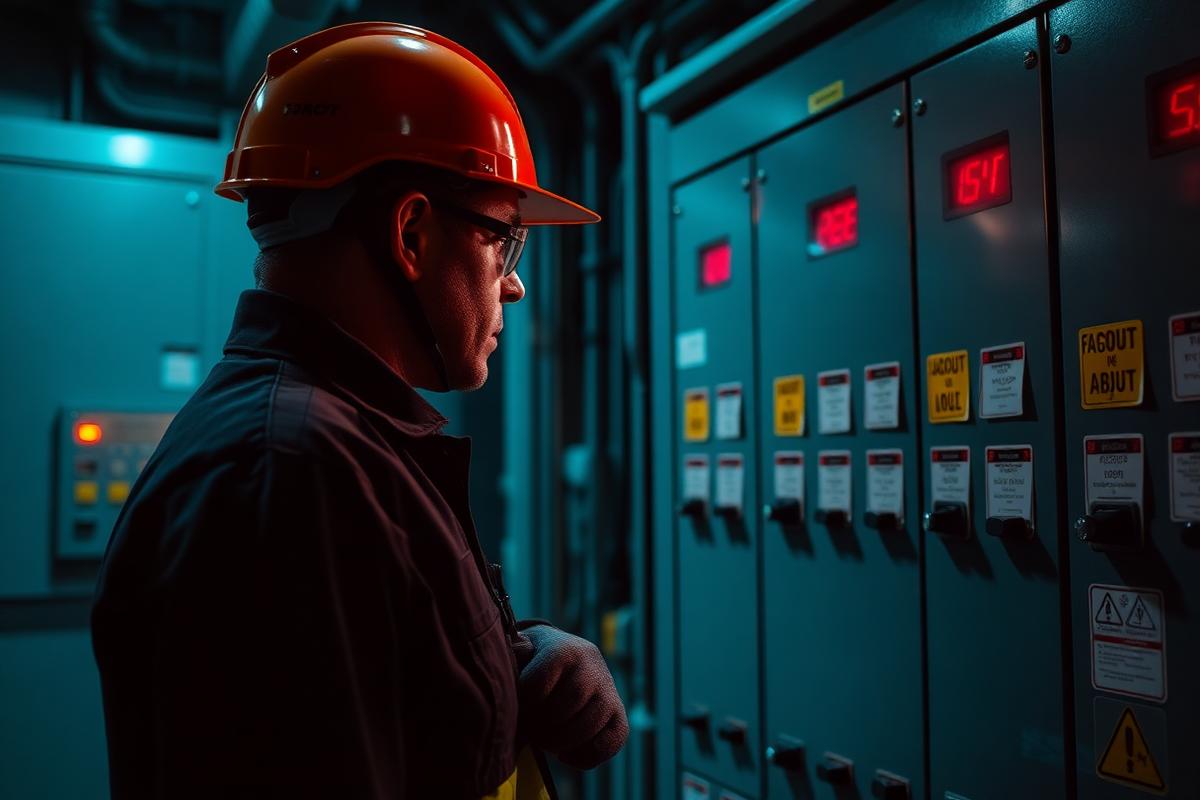 Industrial Safety
Technical blog explaining PPE, LOTO, risk assessment, electrical hazards, and industry best practices.
Skills used
Technologies
Most electrical accidents I have seen on site did not happen because someone lacked knowledge. They happened because a shortcut felt harmless on a busy shift. A breaker that was "about to be isolated anyway", a permit signed before the isolation was physically verified, a rubber mat that had been missing for two weeks and nobody raised it.
That is why lockout-tagout only works when it is treated as a habit and not paperwork. On the 800 MW units I work with, the sequence is simple and non-negotiable: isolate, lock, tag, test dead with an instrument you have just proved on a known live source, and only then touch the equipment. The last step is the one people skip most often, and it is the one that kills.
PPE follows the same logic. Arc-rated clothing rated for the actual incident energy at that panel, not the generic set kept near the store. Face shields for switching operations. Gloves that were pressure-tested this quarter, with the test date readable without squinting.
Risk assessment ties it together. Before any job, we ask three plain questions: what can release energy here, who is standing in the path if it does, and what stops it. If the third answer is "we will be careful", the job is not ready. Written this way, safety documentation stops being a compliance file and starts being something a technician actually reads at 2 a.m.
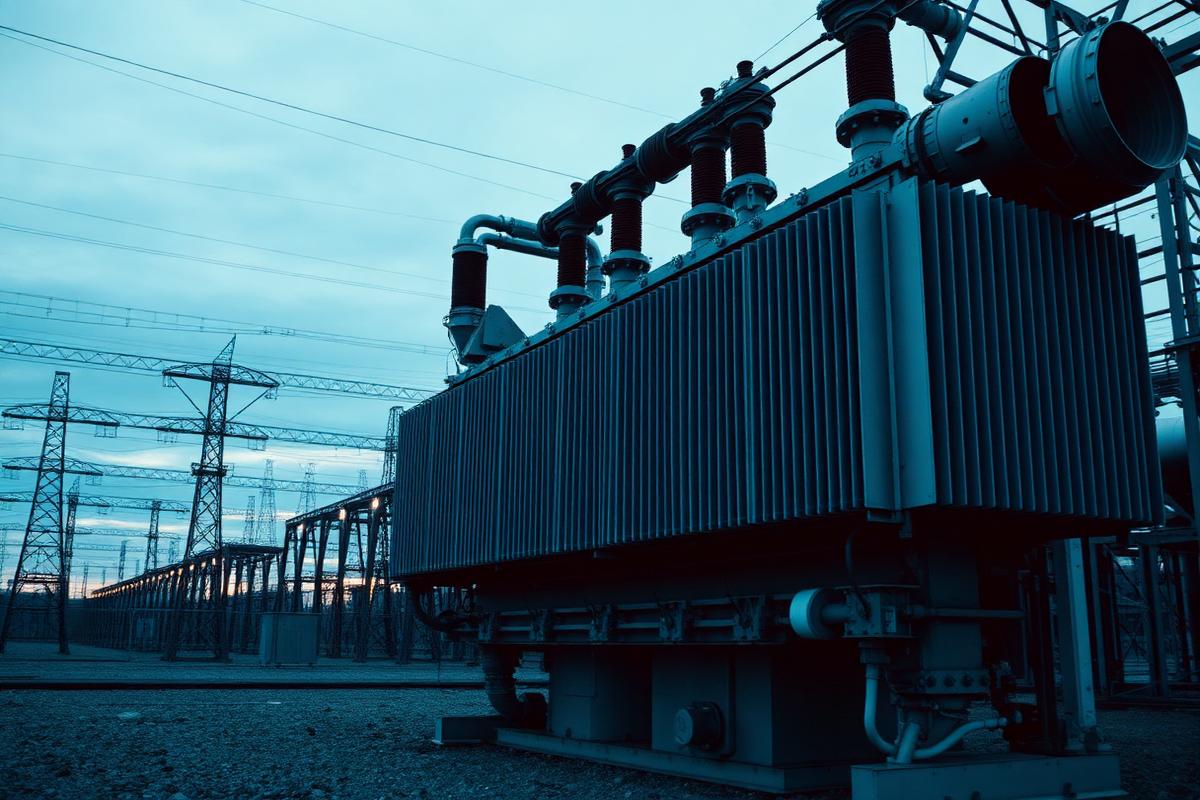 Maintenance
Comprehensive guide covering transformer maintenance, oil testing, preventive maintenance, diagnostics, and reliability.
Skills used
Technologies
A transformer rarely fails without warning. It usually spends months telling you something is wrong, in a language most maintenance teams are too busy to read: dissolved gas numbers creeping up, a bushing running two degrees warmer than its neighbour, oil that has quietly lost its dielectric strength during a humid monsoon.
Dissolved gas analysis is the closest thing we have to a blood test. Rising acetylene points to arcing. Ethylene without acetylene usually means overheating in the oil. Hydrogen alone often means partial discharge. The absolute values matter less than the trend, which is why a DGA report is worthless unless you can put it beside the last four.
Then there is the unglamorous half of the job. Silica gel that has turned pink and stayed pink. Breather oil topped up. Buchholz relay alarms tested rather than assumed. Tap changer contacts inspected on schedule, because on-load tap changers cause a surprising share of failures on units that are otherwise healthy.
The reliability payoff is real. A unit with disciplined oil testing, thermography twice a year, and honest trend logs will usually give you a six-month warning before anything catastrophic. A unit without them gives you a bang and an outage report.
 Education
Educational article covering generation, transmission, distribution, substations, and protection systems.
Skills used
Technologies
When the light in your room comes on, you are at the tail end of a chain that started a few hundred kilometres away, moments earlier. Electricity is still one of the few products manufactured and consumed in the same second, and the whole grid exists to keep that balance.
Generation is where energy changes form: coal or gas heats water into steam, steam spins a turbine, the turbine spins an alternator. Wind and hydro skip the boiler but end at the same alternator. Solar skips the spinning entirely, which is exactly why grid operators now worry about inertia.
Transmission raises the voltage to 220 kV or 400 kV for one blunt reason: the same power at higher voltage means lower current, and lower current means far less energy wasted as heat in the wire. Substations then step it back down in stages until it reaches the 230 V socket at your wall.
Protection is the part nobody notices when it works. Relays watch current and voltage continuously, and when a fault appears they decide, in a few milliseconds, which breaker should open so the smallest possible part of the network goes dark. A good protection scheme is judged not by whether faults happen, but by how little of the grid notices them.
 AI & Content
Explains AI workflows, human editing, productivity, and ethical content creation.
Skills used
Technologies
AI did not replace technical writing. It replaced the blank page, which was never the hard part anyway. The hard part is knowing that a claim about relay coordination is subtly wrong, and AI is confidently bad at exactly that.
My workflow is boring on purpose. I gather the source material first: standards, datasheets, my own site notes. Then I use AI to shape an outline and to draft the sections where the physics is settled and only the phrasing is in question. Every number, every standard reference, every procedure gets checked against a real source before it survives into the draft.
The editing pass is where the article becomes usable. AI writes in a tidy, weightless register that engineers stop reading after two paragraphs. So I cut the hedging, add the specific example, put the caveat where the reader will actually trip, and let sentences vary in length again.
Ethically, I think the line is simple: disclose the workflow, take responsibility for every claim, and never publish something you could not defend in a review meeting. Used that way, AI roughly doubles throughput without costing accuracy. Used the other way, it produces content that ranks for a week and embarrasses you for a year.
 SEO Article
SEO article discussing solar energy, wind energy, battery storage, smart grids, and future technologies.
Skills used
Technologies
Solar in India stopped being an environmental argument some years ago and became an arithmetic one. Once tariffs from large solar parks fell below what a new thermal plant could offer, procurement teams did not need convincing about the climate; the spreadsheet did the convincing.
What the spreadsheet did not solve is timing. Solar peaks at noon, demand peaks in the evening, and no amount of extra panels fixes that mismatch. This is why battery storage moved from pilot projects to tender conditions so quickly, and why round-the-clock renewable contracts now bundle solar, wind and storage into one product.
Wind complements it well, particularly on the western coast where the monsoon months carry the load that solar loses to cloud cover. Hybrid parks sharing one evacuation line squeeze far more value out of the same transmission capacity, which is often the real constraint rather than generation.
The quieter change is on the grid side. Feeder-level monitoring, automated switching and demand forecasting let operators handle variable supply without keeping expensive spinning reserve idle all day. The future here looks less like a dramatic technology leap and more like a decade of steady, unromantic engineering.
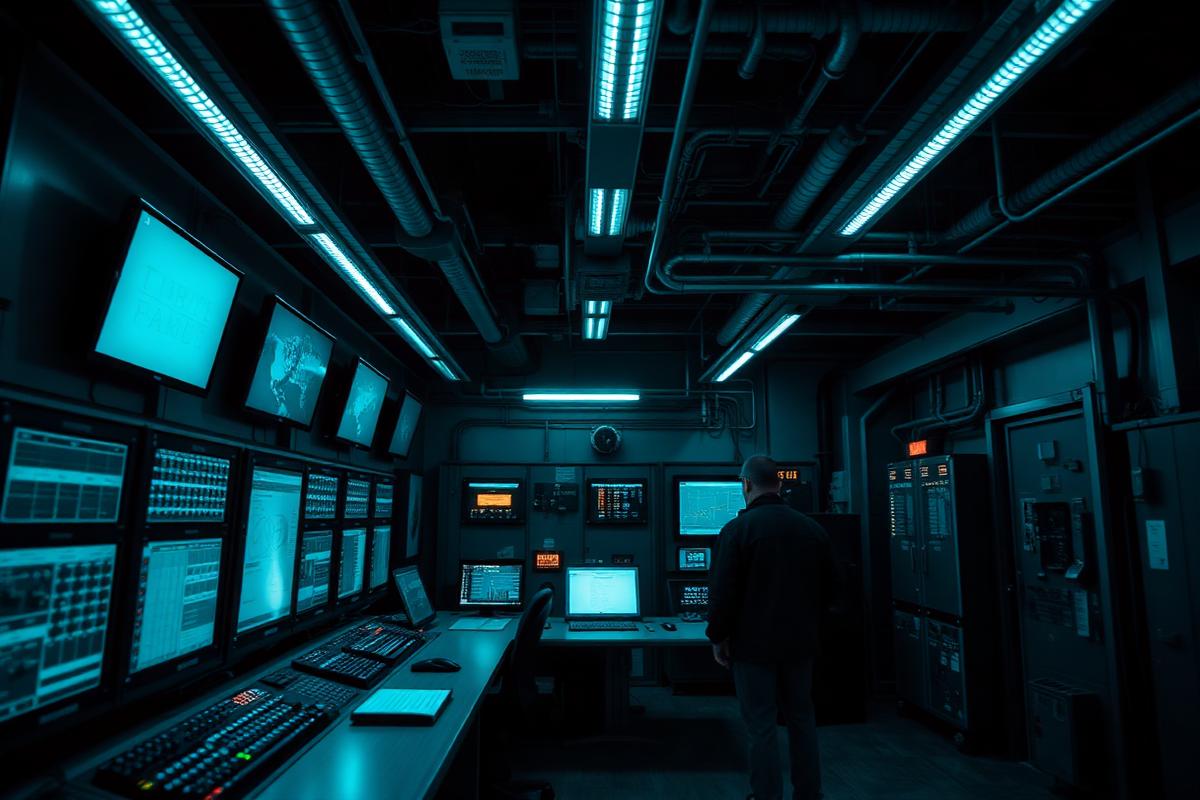 Project Report
Field-style report walking through a real 800 MW unit trip, the alarm sequence, root cause hunt, and the restart decision.
Skills used
Technologies
It was a little past 2 a.m. when the annunciator went off and the load on Unit 2 collapsed from 780 MW to zero in under a second. In a control room, a trip does not feel dramatic. It feels quiet. The hum changes, the operators stop talking, and everyone looks at the same first-out relay window.
The first-out said generator differential. That narrows the world considerably, but it also raises the stakes, because differential protection does not operate on nuisance. We pulled the disturbance recorder file and lined up the current waveforms. Phase B showed a rise that did not match the other two, roughly two cycles before the trip.
The walk-down found it. A cable termination in the isolated phase bus duct had been running hot for some time; the heat-shrink was discoloured and there was carbon tracking on the support insulator. The moisture that had crept into the duct over the monsoon finished the job.
Writing the report afterwards, the useful part was not the failure itself. It was the two thermography scans from earlier in the year showing that exact termination trending warmer than its neighbours, filed and never escalated. That single line changed the plant's thermography review process more than any recommendation about cable terminations ever would have.
 Case Study
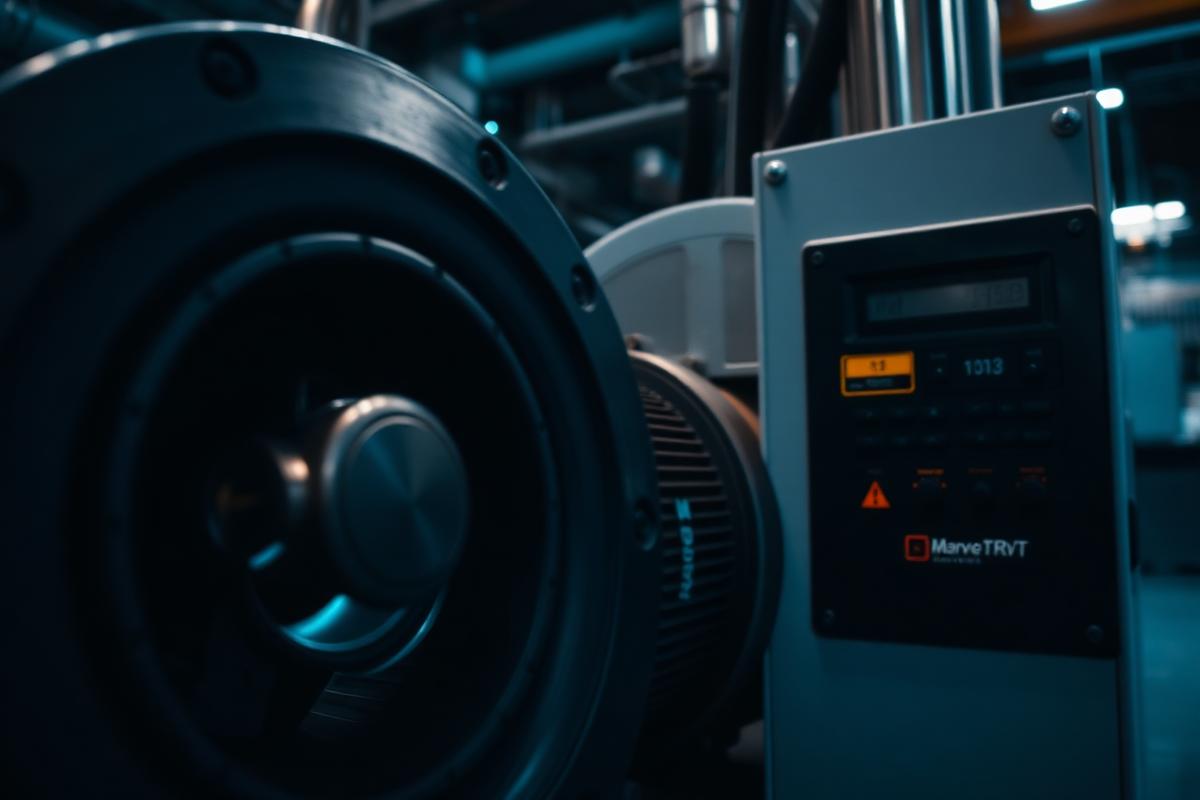
Case study on premature motor failures in a plant auxiliary system, covering bearings, VFD harmonics, insulation, and alignment.
Skills used
Technologies
A 250 kW induction motor on a boiler feed system failed three times in eighteen months. Each time, the rewind shop returned it, each time it ran fine for a few months, and each time someone wrote "manufacturing defect" in the log. It was not a manufacturing defect.
The first clue was the bearing. Every failure showed the same fluting pattern on the non-drive-end race, fine parallel grooves that look like a record. That is a signature of shaft currents, and shaft currents on a VFD-fed motor usually mean common-mode voltage with nowhere sensible to go.
The second clue came from the cable run. The drive sat over sixty metres away, with a standard unscreened cable, which turns the installation into an efficient antenna and puts steep-fronted voltage spikes on the winding every switching cycle. The insulation tests were passing, but the polarisation index was drifting down year on year.
The fix was unglamorous and cheap compared to three rewinds: an insulated bearing at the non-drive end, a shaft grounding ring, screened VFD cable with a proper 360-degree gland, and a dV/dt filter at the drive. Two years later the motor is still on its first bearing set. The lesson I kept from it is that repeat failures are almost never bad luck; they are a question someone stopped asking.
 Documentation
How a rewritten standard operating procedure cut errors by making the document usable at the equipment, not at a desk.
Skills used
Technologies
The old procedure for changing over auxiliary transformers was eleven pages long, written in passive voice, and lived in a binder in the shift office. Nobody carried it to the switchgear room. Everyone did the job from memory, which worked until the day someone new did it from memory.
When I rewrote it, I did not add information. I removed about 40 percent of it. Background theory moved to an appendix. Warnings moved from a block at the front to the exact step where the hazard exists, because a warning three pages away from the action is decoration.
Structure did the rest. One action per numbered step. Verbs first, in the imperative. Checkboxes for anything that has to be confirmed physically. A single decision table replacing four paragraphs of if-then prose. The whole procedure fitted on two laminated sides that clip to the permit.
Six months later the changeover was being done in less time with fewer clarification calls to the senior engineer. No one complimented the document, which is the point. Good technical writing is invisible; you only notice it by the mistakes that stop happening.
Resume
Open it directly in your browser or save a copy — always the latest version.
Technical Content Writer | AI-Assisted Content Writer | Electrical Engineer
Why Work With Me
Real Industry Experience
Engineering Accuracy
AI-Assisted Productivity
Human Quality Editing
SEO Best Practices
Research-Based Writing
On-Time Delivery
Professional Communication
Workflow
Understand Requirements
Research
AI-Assisted Draft
Human Editing
SEO Optimization
Quality Assurance
Final Delivery
Testimonials
Feedback from content teams, founders and editors I've written for across India, the US, the UK and Europe.
Nitesh writes like an engineer who also happens to write well. The safety article he delivered needed almost no technical corrections, which is rare for us.
Voltgrid Industrial
Blog
Recent and upcoming articles from the intersection of engineering and content.
Coming soon
Coming soon
Coming soon
Coming soon
Coming soon
Coming soon
Contact
Tell me about your content goals — technical blogs, documentation, or an SEO article series. I usually reply within one working day.